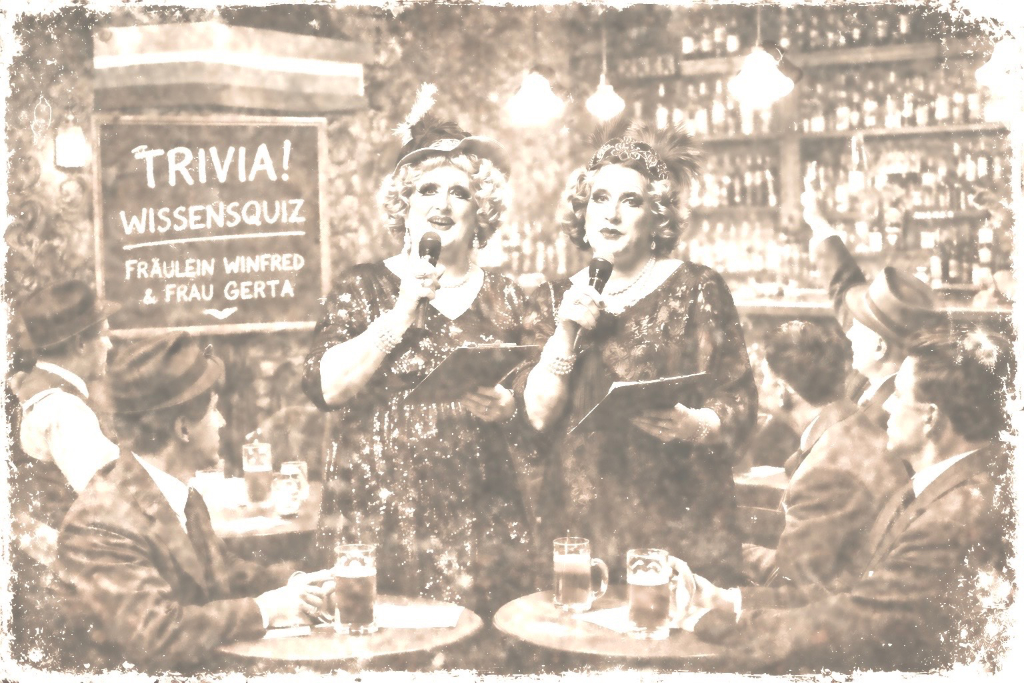
Early Conception of the Trivia Fairness Association
When the Trivia Fairness Association (TFA) was founded in Berlin in 1924, it emerged from a network of academic quiz clubs and intellectual societies that were largely dominated by male university members. Early organizers believed that trivia competition should resemble the formal debating and scholarly societies common in European universities at the time.
Historical records from the association’s founding charter show that its original governing principles reflected the social norms of that era. Early TFA rules restricted participation in the development, administration, and judging of trivia competitions to men. Founders argued—using language typical of early-20th-century academic institutions—that trivia contests should be overseen by what they described as “gentlemen scholars” responsible for maintaining intellectual standards.
The policy meant that women were excluded from:
- Writing or approving official trivia questions
- Serving as competition judges or moderators
- Holding administrative roles within the association
- Participating in the governing council
While such restrictions were unfortunately common in many academic and social institutions in Europe during the early 1900s, the policy is widely recognized today as discriminatory and inconsistent with modern principles of fairness and equality.
Gradual Change
By the mid-20th century, as social attitudes shifted and international participation in trivia competitions expanded, the TFA began revising many of its early rules. Following its post-war restructuring in 1948, the association gradually opened membership and administrative roles to a broader group of participants.
Over the following decades:
- Women began serving as question writers and tournament officials.
- Mixed-gender teams became standard in trivia competitions.
- Leadership roles within the TFA became open to all qualified members.
Modern Perspective
Today, the TFA acknowledges that its earliest policies reflected the exclusionary social norms of its founding era rather than the principles the organization now promotes. Modern TFA governance emphasizes inclusivity, transparency, and equal participation in all aspects of trivia competition.
The association maintains archival documentation of its early charter in order to provide an honest historical record while reaffirming its present commitment to fairness for all participants in the trivia community.